Taking a break from fitness can create more guilt than the break itself. Whether you stepped away for three weeks, six months, or longer, coming back often feels harder than it should. You may worry that you lost your progress, that your first class will be too difficult, or that everyone will notice you have been gone.
Fitness gaps happen for valid reasons. Burnout, illness, travel, work deadlines, family demands, and stressful life events can all make exercise difficult to maintain. These are not signs that you failed. They are signs that your energy was needed somewhere else.
The best way to approach returning to exercise is to stop thinking of it as starting over. You are resuming something your body already knows. Your strength and confidence may feel rusty, but they are not gone.
September is an especially effective time to return. As summer schedules settle and routines become more structured, fall creates a natural opportunity to rebuild healthy habits.
Why Fitness Gaps Happen, and Why They Do Not Mean Failure
Burnout often develops when a fitness routine demands more time, energy, or perfection than real life can support. Someone may commit to working out five days per week, miss one session, and feel as though the entire plan has fallen apart.
This all-or-nothing mindset turns a small interruption into a long absence. One missed class becomes a week away, then guilt makes the next class feel even harder to book.
Work stress, parenting, travel, illness, caregiving, and major life changes are not excuses. They are legitimate demands competing for your physical and mental energy.
When learning how to get back into fitness, the goal is not to compensate for everything you missed. Trying to make up for lost time often leads to excessive soreness, frustration, or another round of burnout. A better goal is to build a routine that fits your current life more realistically.
What Happens to Your Body During a Fitness Break
Your body changes during a break, but it does not erase every adaptation you built. Muscle memory allows your nervous system to retain many of the movement patterns and skills you practiced consistently.
After roughly two to four weeks of inactivity, cardiovascular endurance may begin to decline, while strength and movement familiarity often fade more slowly. You may become winded sooner or notice that familiar exercises require more concentration.
The encouraging news is that previously trained people often regain fitness faster than they developed it initially. Your body has already learned how to coordinate movements, recruit muscles, and respond to resistance.
Your first class back may feel difficult, but progress can return quickly. By the third week, many movements may feel familiar again, even if you are not yet at your former capacity.
Why Lagree Is the Best Way to Restart a Workout Routine
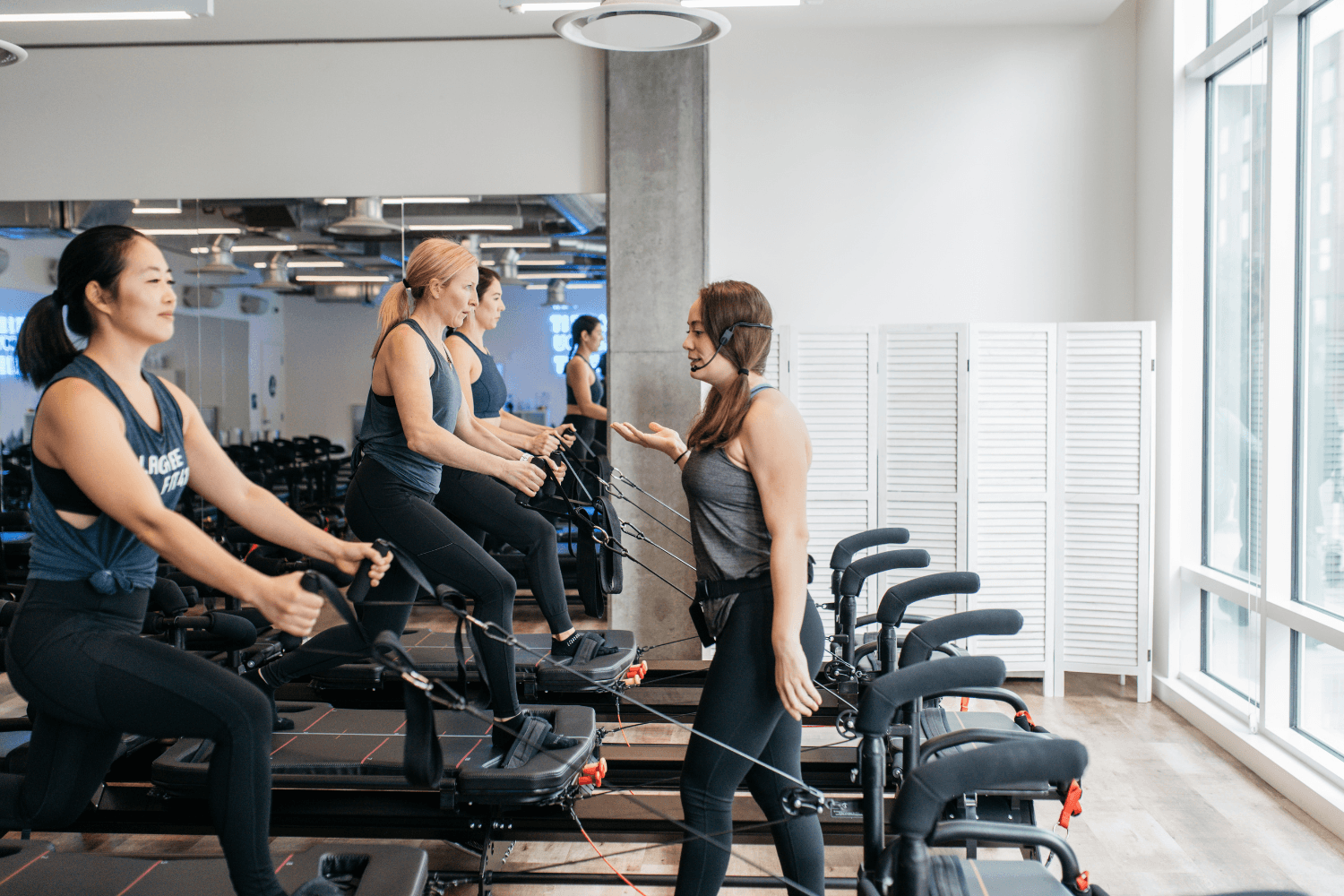
Lagree is especially well-suited for people who want to restart a workout routine without immediately returning to high-impact training.
The method is low-impact, which limits repeated stress on the joints while still creating a challenging full-body workout. Slow, controlled movements build muscular tension without relying on jumping, sprinting, or other high-impact exercises that may feel intimidating after time away.
Spring resistance on the Megaformer can be adjusted to your current ability. You do not have to return using the same resistance you used before your break. You can meet your body where it is today and increase the challenge gradually.
The 40-minute class format also makes reentry manageable. You do not need to commit to a long gym session or design an entire workout plan on your own.
Instructor guidance is another advantage. Instead of remembering exercises, sets, and progressions, you can follow clear cues and request modifications. Your main responsibility is simply to show up.
How to Come Back Without Overdoing It
The biggest mistake people make when returning to exercise is trying to prove they are still as strong as they were before the break. Your first class is not a test. It is a chance to assess your current capacity.
Begin with lighter spring resistance than you remember using. Even if your larger muscle groups still feel strong, smaller stabilizing muscles may need time to reengage.
Aim for two classes during your first week instead of immediately returning to four or five. Leave enough recovery time between sessions to evaluate your soreness and energy. Progressive reentry helps prevent the soreness spiral that can derail a second attempt.
Tell your instructor that you are coming back after a break. They can offer appropriate modifications, adjust their cues, and help you distinguish productive muscular fatigue from discomfort that feels unsafe.
The Mental Side of Returning to Exercise
Shame about the gap is often a bigger barrier than the workout itself. You may feel embarrassed that you lost consistency or worry that others will judge your performance.
Most people in class are focused on their own workout. Your instructor is there to support your return, not measure how long you were away.
Your body is not behind. It is exactly where it is right now, which is the only place you can start.
Lower the psychological bar for the first week. The goal is attendance, not performance. Completing class with modifications is still a successful return.
Motivation usually follows action rather than preceding it. Book the class before you feel completely ready. Showing up creates momentum that waiting rarely produces.
How to Restart Your Workout Routine So It Actually Sticks
Before rebuilding your schedule, identify what caused the break. The purpose is not to criticize yourself. It is to design a better plan.
If time was the issue, choose two specific class times per week and book them in advance. Treat those sessions as fixed appointments rather than optional plans.
If burnout was the issue, return at a lower frequency than your previous peak. Two consistent classes are more valuable than an ambitious five-class schedule that lasts only two weeks.
If guilt or perfectionism caused the gap, use the “never miss twice” rule. One skipped class may be necessary rest. Missing the next scheduled class increases the risk of another extended break.
Understanding how to get back into fitness means accepting that consistency does not require perfection. It requires returning after disruptions.
What to Expect in Your First Month Back at Lagree
During week one, the workout may feel harder than expected, and you may experience more soreness than you remember. This is normal and temporary.
In week two, body awareness often returns before strength. You will remember how movements should feel and reconnect with proper form.
By week three, class begins to feel familiar rather than overwhelming. Transitions become smoother, and you may notice that the shake arrives later in a set.
By week four, consistency starts to feel normal again. You may not be at your previous peak, but you will have rebuilt the rhythm that can take you there.
Using September as Your Reset
September is one of the most practical times to restart a workout routine. School schedules resume, vacations slow down, and the unstructured pace of summer begins to settle.
It offers much of January’s fresh-start energy without the pressure to completely transform your life overnight. The seasonal shift encourages people to organize their schedules and return to habits that slipped during summer.
Lagree Fit 415 also welcomes new clients and returning regulars during this seasonal reset, creating shared momentum. Even if you do not have children, you can use the back-to-school mindset. Choose your weekly class times, book them in advance, and treat September as the beginning of a more sustainable chapter.
Welcome Back. You Never Really Left.
A fitness break is not failure. It does not erase the work you did before. It is simply a pause in an ongoing practice.
Lagree offers a forgiving way to return because it is low-impact, adjustable, instructor-led, and completed in 40 minutes. You can modify resistance, rebuild gradually, and regain confidence without forcing your body to perform at its former peak immediately.
You do not need to be in shape before returning to exercise. Coming back is how you get back in shape.
Ready to return? Book a class at Lagree Fit 415. Your Megaformer is waiting, and no one is keeping score.