If you’ve ever found yourself sweaty and sore after a barre class, only to try Lagree and question everything you thought you knew about fitness—welcome to the club. Both barre and Lagree are low-impact workouts that focus on control, precision, and muscular endurance.
But when it comes to the question “is Lagree harder than barre?”—the short answer is yes. The long answer? Well, let’s break it down. We’ll compare Lagree vs. barre to see what really sets them apart—and why Lagree is the more challenging workout.
The Style: Movement vs. Muscle Tension
Although they’re often grouped together as “low-impact sculpting workouts,” barre and Lagree are drastically different in how they challenge your body. Let’s explore how these two methods vary.
Barre is all about tiny, controlled movements that isolate small muscle groups with minimal resistance. Usually you use your own body weight or light equipment like 2 lb. dumbbells. The goal?
Burn out the muscles with high reps and micro-movements. Expect pulsing movements…a lot. Barre is graceful, ballet-inspired, and focuses heavily on posture, alignment, and flexibility.
You’ll feel a long, slow burn in your areas such as your thighs and glutes, especially during those infamous pulsing squats or relevé holds. It’s great for beginners and anyone looking to increase flexibility, muscle endurance, and core stability without going too hard.
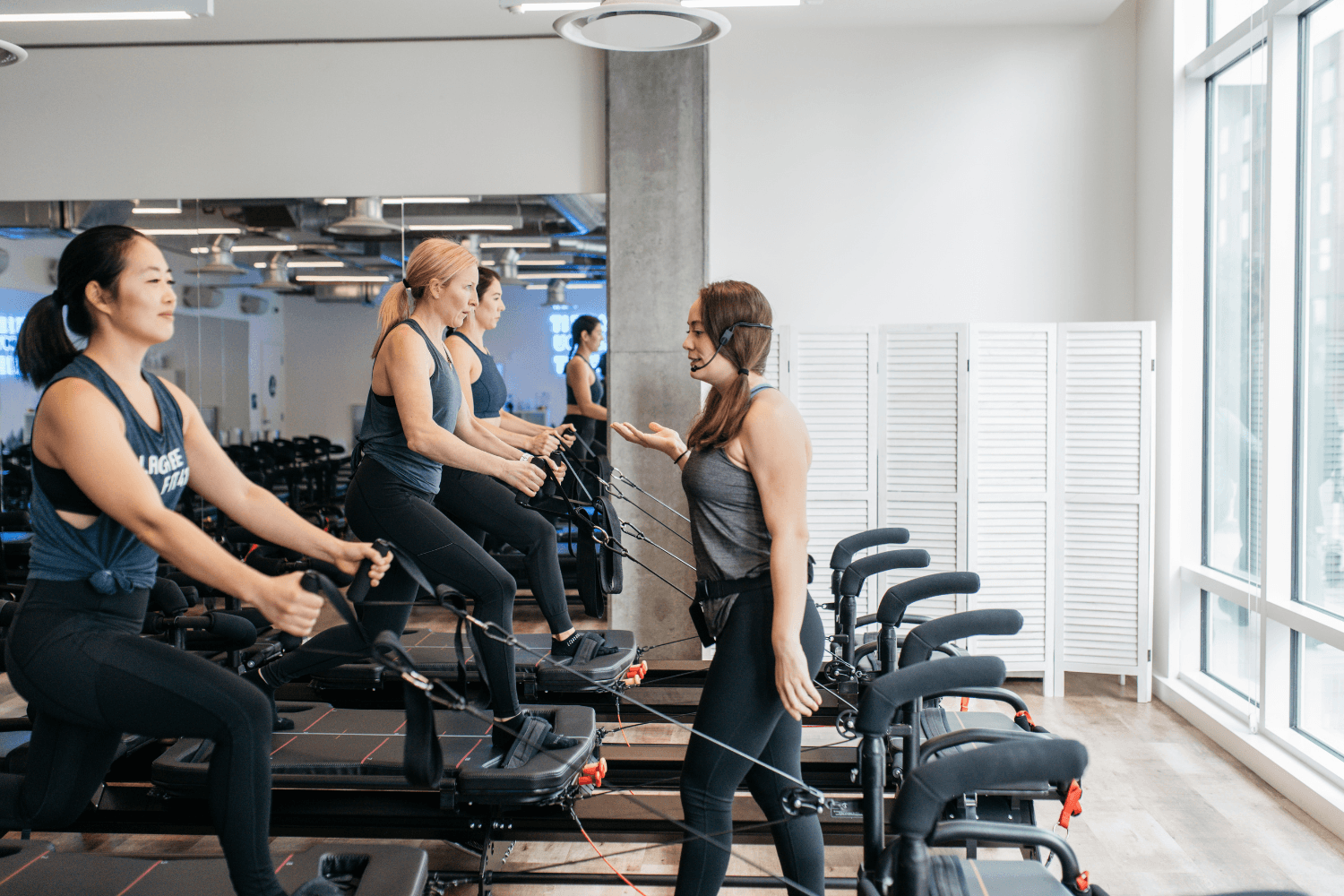
Lagree, on the other hand, offers a high-intensity workout. Every move is slow, deliberate, and under resistance, using a spring-loaded Megaformer machine. The style focuses on time-under-tension, meaning your muscles are constantly working with zero breaks.
The result? Full-body fatigue in just 45 minutes. You’ll shake and sweat, and feel that good burn. Lagree demands more muscular endurance and strength.
Bottom line: Barre targets small muscle groups with simple, repetitive movements. Lagree takes those movements, slows them down, increases resistance, and works your entire body. So yes—Lagree demands more strength, control, and total-body engagement.

The Burn: Which One Leaves You Shaking (in a Good Way)?
Both barre and Lagree will have you feeling the fire, but how that burn shows up is completely different. This is where you can feel the difference between the intensity of Lagree vs barre.
Barre gives you that classic "oh-my-god-my-quads" feeling through high reps and isometric holds. You’ll often stay in a single position (like a squat or lunge) while performing micro-movements or static holds that build up lactic acid and fatigue. It burns, but it’s more of a slow simmer.
Lagree is a full-on inferno.
Every Lagree move is designed to push your muscles to near failure by maintaining more time under tension, with zero rest in between. Think slow lunges, resisted planks, and dynamic core work that hits all the angles. You’ll experience muscle tremors in just a few reps—and that’s the goal.
Results: Which Workout Builds More Strength + Tone?
Let’s be real—most of us work out not just to feel good, but to see results. So when it comes to Lagree vs. barre, which delivers the stronger physical transformation?.
Barre is great for toning and building endurance in your smaller muscle groups (think glutes, inner thighs, calves, and shoulders). It helps improve posture, elongate the body, and build a foundation of strength. You’ll feel tighter and more graceful, but you’re unlikely to gain major strength or visible muscle tone.
Lagree, however, is a powerhouse when it comes to body composition changes. It helps build lean muscle across your whole body, especially your core, glutes, and legs. Because it engages multiple muscle groups at once—and under resistance—it leads to higher calorie burn, lean muscle growth, and increased metabolism.
Moves like wheelbarrow (a plank variation on the Megaformer) or skating lunges fire up your core, glutes, legs, and arms—all at the same time. Over time, this leads to a stronger, leaner, and more defined physique.
If your goal is actual strength gains and full-body toning, Lagree wins this round. So if you’re ultimately seeking body composition changes, Lagree is the more effective option.

Impact on Joints: Both Are Gentle—but One Goes Deeper
One of the best things about both Lagree and barre is that they’re low-impact. That means they’re kind to your joints and great for injury prevention or recovery. But if we’re splitting hairs? Lagree takes joint protection to the next level.
Barre is gentle—but the repetitive, high-rep nature of some movements (especially on the knees and hips) can cause discomfort or strain if alignment is off. Since there’s minimal equipment, you’re relying on your own awareness to stay aligned and supported.
Lagree, in contrast, offers built-in support and guidance through the Megaformer. Every movement is slow and controlled, and the machine allows for custom resistance, proper alignment, and constant tension. There’s zero impact, no jumping, and a strong focus on joint safety.
This makes Lagree an ideal pick for people who want a high-intensity, low-impact workout.
The Challenge Factor: Which One Pushes You More?
Let’s not sugarcoat it—both workouts are tough in their own ways. But if we’re asking, “is Lagree harder than barre?” The answer becomes clear pretty quickly once you’ve tried both.
By no means are we saying Barre is easy, though. Barre challenges your mental focus and muscular endurance. Holding a plié squat for 90 seconds? Brutal. Pulsing for the last 30? Even harder.
But Lagree? Now this is a workout that will humble you.
Lagree turns up the intensity with:
- Time under tension to exhaust your muscles
- Compound movements to work multiple muscle groups at once
- Zero rest between transitions to keep your heart rate up
Even athletes or advanced gym-goers struggle with their first Lagree class. It’s not about speed or how heavy you can lift—it’s about how slow you can go while maintaining control and intensity. Lagree is deceptively challenging.

Choose What Fits Your Goals—But Know the Difference
Ultimately, it’s not about which workout is better—it’s about what works best for you. But understanding the difference helps you pick the right path for your fitness goals.
If your goal is light tonight or if you want to improve your posture and flexibility, barre might be the better choice.
But if you want to get stronger, leaner, and build both muscular and cardiovascular endurance, Lagree is the better fit.
Is Lagree harder than barre? Yes, but it’s also more dynamic, more efficient, and more transformative for full-body results.
Ready to try the workout that pushes limits—without pushing your joints? Book a Lagree class and discover how strong you really are.